

![[Image: wizardingworld.png]](https://knockturnbound.net/images/logos/wizardingworld.png)
General Information
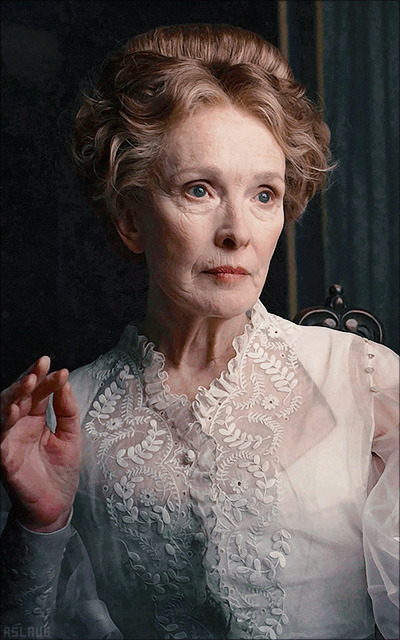
Character Name:
Pucine Eugénie de Lac
Type of Character:
Adult
Age:
63
Date of Birth:
1858
Blood Status:
Pureblood
Residence:
London, England
Family:
Géraud Auguste Préaux - father
(Born c. 1833.)
Corisande Léocadie Préaux - mother
(Born c. 1836.)
Armand de Lac - husband.
(Born c. 1850.)
Darenne Graymere, née de Lac - daughter.
(Born c. 1878.)
William Graymere - grandson
(Born c. 1904)
Ellen Graymere - granddaguther
(Born c. 1903)
.. potentially others.
Occupation:
Senior Administrator in the The Department of Magical Education.
Personality & History
Personality:
Pucine de Lac is a woman shaped by the shocks of French instability from the Franco-Prussian War and Siege of Paris (1870–71), through the Paris Commune and its brutal suppression (1871), and later the national fracture of the Dreyfus Affair (1894–1906). Having watched ideals collide with hunger, violence, and bureaucracy, she has grown into someone who distrusts passion as policy: she prefers tradition because it is predictable, and she tolerates modernity only when it is disciplined and is firmly against it superseding what has long been the norm.
History:
CW/TW: war/siege, starvation & food desperation, shelling/explosions, non-graphic description of bodies, civil conflict/political violence, trauma responses.
late 1870,
Paris.
The No-Magiques are besieging Paris.
Her parents were horrified. Pucine was fascinated.
It was supposed to be a simple trip, the sort her mother arranged whenever she tired of wizarding faces and slipped, with a particular ease, into the Muggle world. A season in Paris; theatres and salons, dressmakers on the Rue de la Paix, their family apartment with it's tall windows and a view over a boulevard that was meant to be lively, not lined with sandbags.
The trains stopped first.
Not with any grand announcement, no. Just fewer whistles in the distance, fewer little smudges of steam above the roofs when she pressed her forehead to the cold glass. Deliveries were late, then they did not come at all. One morning, there were no more timetables printed on the inside pages of her father's morning paper, only maps with thick black lines drawn around Paris. Her mother refolded the empty napkin where it should have been and said nothing. Her father, the same.
Then the Floos.
That had been different. Trains belonged to the No-Magiques. Fireplaces did not. One morning, the Grate simply spat back her father’s letter, unburned, the green flames folding in on themselves like a sulk. By evening, the Ministry notice had come: tous les déplacements non essentiels sont suspendus, et tous les réseaux sont restreints « pour la durée de l'état d'urgence ».
All non-essential travel suspended, all networks restricted “for the duration of the emergency."
Her parents read it twice. Her mother went very quiet.
Pucine, who was thirteen and not nearly as sensible as she would one day pretend to be, pressed her nose to the cold window glass and watched soldiers shovel sand into the sacks that now walled off the lively boulevard she’d been promised.
By November, Paris shrank.
Not on any map, of course. On paper, it was the same city, the same arrondissements, the same elegant lines of boulevards drawn up by men who had never planned for hunger.
She thinks.
Pucine is hungry, too.
Food grew stranger before it grew scarce. Horse first, then things she did not ask about. Once, in a restaurant that still pretended to be grand, she saw elephant written, very small, on a chalkboard menu, and felt her mother’s hand clamp around her wrist before she could stare too long.
There were no more letters. Except for the ones that came by balloon now, those strange, drifting specks in the winter sky that made her drift to the cold glass while her father muttered about “No-Magique improvisation”, before her mother snapped the curtains shut in front of her.
Still, the balloons were beautiful from a distance.
That was the obscene part.
They rose from somewhere beyond the roofs; round bellies of fabric taking the wind like saints ascending, until they were only a dark bruise against the pale winter sky. And then they were gone.
At some point, she learned the English word ration. That's what they did, after all. Ration. Heat. Light. Even conversation. Coal became something her mother spoke about the way other women spoke about jewels. The apartment’s tall windows wept ice at their edges; breath fogged the glass and never quite cleared.
Her father tried the hearth again one evening, as if repetition could shame it into obedience. He fed the Grate a pinch of powder, a folded page, and the address written in his steady hand. The flames flared green, high, dutiful and familiar, and then spat the letter back into the room, just like in September.
Futile, her mother said when he stormed out, aflush. She learned that, too.
In the street below, someone laughed too loudly, and someone else shouted them down.
Laughter.
That was nice, at least.
early January 1871.
It started on the Left Bank. They said the Prussians had brought guns close enough to reach the city now.
Later, Pucine would say she did not see the shells. It was true. No one did. You only felt them: the quick shiver through the windowpane, the dust that fell from the moulding like flour.
The first shell had not sounded like thunder. Thunder rolls. That? That was singular. One heavy, monstrous impact, then nothing, then another.
After the third, her father said, very calmly, that they would sleep dressed.
It didn’t stop. And her mother grew worse. The woman had been raised for velvet rooms and controlled exits. Now there was no exit. That did something to her.
The entire thing did.
The first time a shell fell close enough to blast out panes in the windows, her mother didn’t scream. When it all fell silent, she laughed once, a short, high sound, then clapped a hand over her own mouth as if she’d sworn in front of a church.
Pucine stared, for one short moment, before laughing with her. It made her stomach hurt; that's how disingenuous it was, but it mattered. Father laughed too. It helped.
Mother didn’t seem to mind that they joined her. The sound was there, and that was enough.
They went down to the cellar after that. Not every night—her father insisted that would be “giving in”—but on the ones where the impacts came faster, closer, shaking plaster down in soft little clouds, that left broken or fallen things to clean up in the mornings after.
The cellar was hot and crowded with too many people, some of whom had come from outside the apartment entirely. Neighbours who had only nodded on the stairs before now sat pressed knee to knee on crates and overturned baskets. Someone had thought to bring a candle; someone else, a bottle; someone else, a sleeping child.
Pucine saw him there, the boy from the street, without his kepi. Dark hair flattened with sweat, coat unbuttoned, with the most reddened, knotted knuckles. He was passing a cup along the row when the next shell landed. The candle flame jumped; dust sifted from the ceiling. A woman began to sob, quietly, into her glove.
“Ça va, madame,” he said. Softly. Not like a soldier. Like an older brother. “It’s far. If it were close, we wouldn’t hear it so… politely.”
People actually laughed at that. A thin, strained thing, but real. Pucine watched the side of his face in the half-dark and thought, stubbornly, that was nice, at least.
Spring 1871.
The next time she saw the boy, he was dead.
Spring had come. The siege ended. Until it just became something else. A new flag went up, then more guns, closer this time, French against French.
He lay against a wall with three other National Guardsmen, coat gone, shirt dark at the front. Someone had tried to cover their faces with a tarp and hadn’t finished the job.
There was a faint buzzing in her ears. One of the flies that had detached itself from the pile, maybe. It didn't look real. So, Pucine turned away.
Their apartment had been requisitioned. The concierge wouldn’t meet her eyes when they left. “Vacant lodgings,” the notice called it, though nothing had felt vacant about their lives.
Eventually, the Ministry came into their lives again.
The rooms they were given were not really rooms. They were parts of other people’s rooms that had been sliced apart and rearranged by magic until nothing quite fit. A dining room without a table. Perhaps it was a common room instead? Living room? A bedroom with a door that wasn't quite one. A fireplace that opened onto nowhere at all before Mother complained and fixed it herself.
All hodgepodge and haste. Huh.
“Temporary,” the witch from the Ministry said, pressing a key into Father’s palm. “Until matters are regularized.”
Mother smiled at her with all her teeth and said nothing.
At Gare Saint-Lazare, she looked around.
It was not the same station. The roofs were the same, sure; iron ribs and smoke-blackened glass, but the people were different. No one hurried. They queued. Lines of people with trunks and bundles and bandaged limbs, heads even. All pointed toward the same few carriages.
The last time she had been here (because of course Mother insisted on the proper immersion of No-Magique travel), there had been hatboxes and porters and her mother worrying about whether the milliner had packed the right veil. Now Mother worried about papers.
Father had gone ahead to argue with the man at the barrier. Not a ticket inspector, a soldier, uniform wrinkled, eyes red-rimmed. Pucine watched his hands move as he spoke: open, placating, then tighter when the soldier shook his head. A Ministry seal glinted once when Father slapped down a folded document, and that seemed to help. Eventually.
It occurred to her later, as the train rattled away, that the soldier was a wizard.
1871–72,
Normandy.
They looked at her strangely when she returned.
Pucine was not surprised. She was fourteen now, and she had lived through nine months of Paris; through hunger that made people mean, through flags that changed faster than the weather, through the kind of gunfire that came from your own countrymen, of No-Magique warfare that came from the sky.
In Normandy, the air smelled of wet earth and sea salt. The wards on the Préaux house sat clean and obedient in the hedgerows, old magic doing what it was told. Everything here still knew its place. Even the house elves spoke softly, as if noise might be impolite. And when Yule came, so did the cousins, little and big.
They asked her polite questions anyway.
Did you see the fighting? Were you frightened? Did you eat those things?
She watched their faces as they asked, watched the small recoil each time her answer came too plain. They wanted something.. neat, perhaps. Paris as a fever dream, Paris as a lesson, Paris as something safely over. Not that it just.. happened, and she knew not what else to say about it.
Her mother, beside her, smiled with the same teeth she had shown the Ministry witch. Since the return, she had started to scrub her hands, arms, everywhere she could reach until the skin shone pink, and that first very night back, said, very evenly, that they would not speak of Paris at table.
Pucine did not argue. She simply learned, quietly, who required silence in order to feel safe.
1877–78.
The next few years after.. blur.
There was a boy. Another. He had opinions about what France should be, and the state had opinions about boys like that. It ended in tragedy, and so it gets no place in her recollection.
What she remembers instead is this: the arguments in drawing rooms, the newspapers her father folded with a sigh, the way older men said instabilité as if it were a stain. Governments fell. Ministries changed hands. Men in Paris shouted about ordre moral and the rights of the Chamber as if they were new words, not rearrangements of familar concepts. Flags stayed the same this time, but only just.
And life moved on. It always does. Eventually, Pucine did too; into a marriage that was not a love story so much as a solution.
Armand de Lac was solid, respectable, properly connected, the sort of man who did not change his mind about politics every six months. He offered a name, a household, a future for children who would not have to learn the sound of shells in their sleep.
It was enough. It had to be.
Prompt Response:
The clock on the far wall ticked loudly. But even that could not be blamed for the time. It read eight minutes past the hour.
Eight.
She closed the folder in her hands with deliberate care.
Rushing would not turn back the minute hand. It would only make her look like everyone else in the Atrium had looked that morning: cloaks askew, hair half-tamed, jostling one another in front of the fireplaces as if shoving could make the Floo burn faster. The ceiling had glowed its usual peacock blue and the line of arriving officials had spilled almost to the golden gates that guarded the lifts.
Eight minutes, she thought. Not an eternity. Still late, by some measures. Well, most, perhaps.
The lift had not helped. The wrought golden grille had clanged shut, the chains had begun their rattling ascent, and the liftman (whose position she found awfully ceremonial) drawled with his usual, maddeningly calm tone, announcing every floor: Department of Magical Games and Sports, Department of Magical Transportation, on and on. Paper aeroplanes had swarmed in and out at each stop like demented swallows, further delaying progress.
None of this would impress the Head.
She smoothed her cuffs once, then opened the door.
The Head of Magical Education looked up from the long table at the front of the room, one hand still resting on the stack of memoranda they had insisted they all read before the meeting. Several administrators turned as well. Their eyes do what eyes always did: count, judge, and whatever else.
“Madame de Lac,” the Head said, with the particular tightness of the English at attempting civility. “We began at nine.”
Well, she had her French civility. “So I understand, monsieur. My apologies. The Ministry has elected to test our patience with its infrastructure this morning. I arrived in the Atrium at a quarter to.”
As the words left her mouth, she found a seat and settled in, before continuing. “But I am here, and that, I think, is what matters.” Pucine set the folder before her, squared to the edge of the table. “If you wish, I can append a recommendation to our minutes suggesting that Departments staggering their start times might reduce congestion in the Atrium and improve punctuality across the board. It is… educational, is it not, when adults model the behaviours they seek to instil in children?”
Someone made a noise that might have been a cough, or just disguising what might have been a laugh.
The Head hesitated, she could tell. They could rebuke her, of course. Could demand a fuller apology. But that would mean admitting that the Ministry’s own arrangements had contributed to the delay, and Pucine knew a person like them may not enjoy confessing structural faults when individual ones would do.
Finally, they gestured to the stack of papers. “We were discussing Hogwarts’ Arithmancy curriculum.”
“Excellent.” She folded her hands, the picture of attentive compliance. “Then we have wasted no time at all. Shall we proceed from page three? The current proposals for standardising OWL questions are, in my view, dangerously vague.”
Late, yes. But she was here.
Order, after all, was not a matter of never being delayed. It was a matter of ensuring that, when you arrived, everything else learned to stand in line.
Miscellaneous
Other Characters
Ellen Graymere.
How did you find us?
RPG Directory